Dreaming about a West Michigan waterfront home but not sure whether an inland lake or Lake Michigan is the better fit? That question comes up often, especially when both options can deliver beautiful views, boating access, and a true getaway feel. The right choice usually comes down to how you want to use the property, what kind of shoreline you want to manage, and how the specific lake compares on price and access. Let’s dive in.
Why this comparison matters
In West Michigan, buyers often assume Lake Michigan always means a higher price and inland lakes always mean a simpler, lower-cost option. In reality, the market is more nuanced than that. Recent listing snapshots show waterfront pricing varies widely by location, frontage, and access, not just by whether the home sits on an inland lake or the big lake.
For example, recent median listing prices show Wolf Lake waterfront around $299.9K, Spring Lake waterfront at $450K, Paw Paw Lake at $499.9K, Grand Haven waterfront at $415K, and South Haven waterfront at $494K. Saugatuck’s overall median listing home price was about $1.03M. That range tells you an important truth: you are not just choosing between two water types, you are choosing between very different ownership experiences.
Price depends on the lake
If you are comparing inland lakes to Lake Michigan frontage in West Michigan, it helps to think property by property. A sheltered inland lake with strong recreational demand can compete with, and sometimes exceed, certain Lake Michigan-adjacent price points. On the other hand, some Lake Michigan locations move quickly into much higher tiers because of open-water views, beach access, and scarcity.
In Grand Haven, current waterfront listings range from the mid-$500Ks to about $1.5M. That is a good reminder that broad labels can only tell you so much. The real drivers are shoreline type, water access, frontage quality, and how usable the property feels day to day.
What buyers should compare first
When you evaluate a waterfront home, focus on these factors before making a simple inland-versus-big-lake decision:
- Type of frontage
- Private or shared access
- Dock potential or existing dock setup
- Shoreline condition
- Water quality and recreational use
- Exposure to waves, wind, and erosion
- Seasonal access and winter usability
- Local rules affecting watercraft or shoreline changes
Inland lakes often offer easier daily use
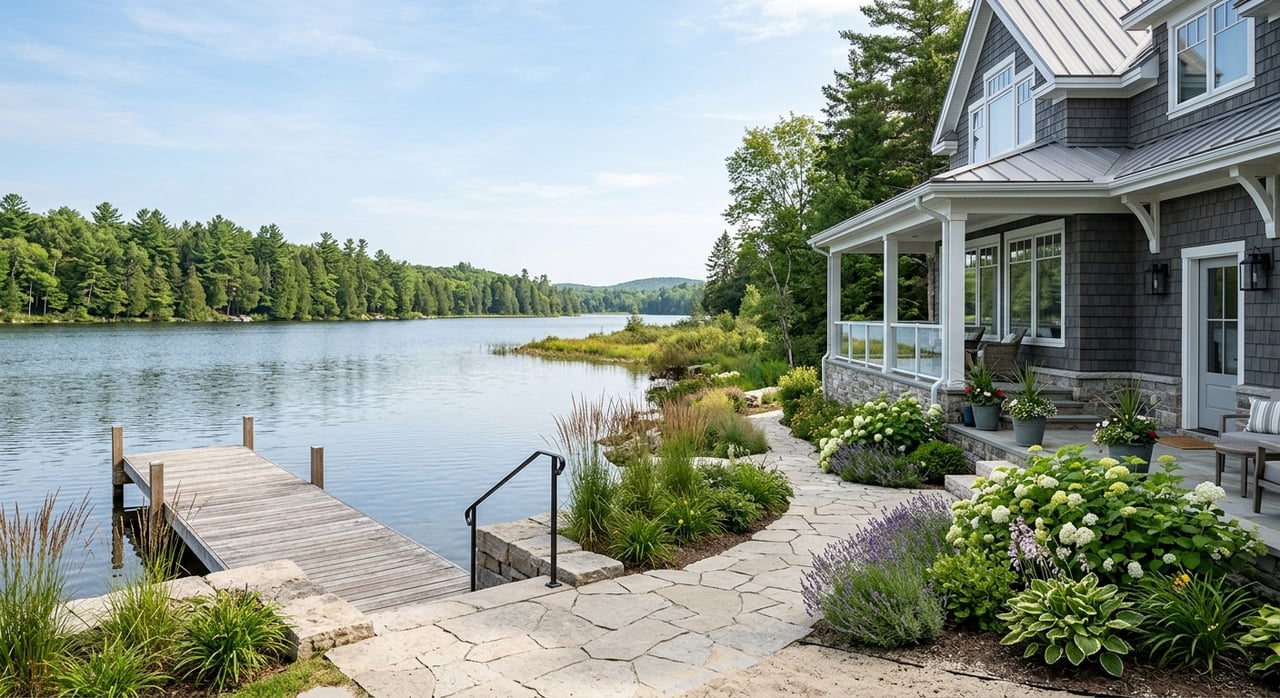
For many buyers, inland lakes fit the way they actually want to spend time on the water. Michigan EGLE notes inland lakes are commonly used for boating, fishing, swimming, canoeing, kayaking, and seasonal or year-round living. If your ideal day includes a pontoon ride, paddleboard session, or a quiet swim off the dock, an inland lake may feel more predictable and easier to enjoy.
That predictability matters when you are thinking beyond summer weekends. Michigan DNR also notes that ice fishing becomes a major winter use when lakes freeze. If four-season recreation is part of your vision, certain inland lakes may offer a broader range of use throughout the year.
Inland lake lifestyle at a glance
In general, inland lakes tend to appeal to buyers who want:
- Calmer water for paddling and swimming
- Easier pontoon and casual boating use
- Fishing and family recreation close to shore
- A more controlled water environment
- Potential winter lake activity when conditions allow
Lake Michigan offers scale and drama
Lake Michigan delivers a different kind of waterfront experience. The views are wider, the beaches often feel more expansive, and the overall setting can feel more dramatic. For buyers seeking a true coastal feel in West Michigan, that larger-water setting is often the draw.
At the same time, bigger water brings more variability. The Great Lakes can have dangerous currents and breaking waves, especially near piers and when waves reach 3 feet or higher. Michigan DNR also warns that high water can create faster currents, colder water, debris, and launch closures.
Big lake living comes with tradeoffs
Lake Michigan may be the better fit if you are drawn to:
- Open-water views
- Beach-focused living
- A larger boating environment
- A stronger sense of scale and exposure
But it also means you need to be comfortable with:
- More weather-related change
- More safety variability near shore
- Greater shoreline exposure
- More complexity around erosion and permits
Shoreline rights are not the same
One of the most important differences between inland lakes and Lake Michigan is the legal framework around the shoreline. For inland lakes, riparian rights typically include access, dockage, swimming, and general water use. For natural inland lakes, the bottomlands below the ordinary high-water mark are privately owned by riparian property owners.
Lake Michigan works differently. The Great Lakes shoreline is held in public trust, submerged lands are state-owned, and the public may walk below the ordinary high-water mark. That difference can shape everything from privacy expectations to what kinds of shoreline improvements may be possible.
Why this matters when buying
Before you write an offer, confirm whether the property is on:
- A natural inland lake
- An impoundment
- True Great Lakes frontage
That distinction matters because ownership rights, permitting, and maintenance expectations can change depending on the waterbody. A beautiful shoreline is only part of the story. Knowing how you can use and maintain it is just as important.
Permits and maintenance can look very different
On inland lakes, EGLE says permits are required to dredge or fill bottomlands, place or enlarge structures on bottomlands, or build or expand marinas. Some inland lakes also have local ordinances that set vessel speed limits or restrict wake boats and other activities on all or part of the lake.
On Lake Michigan, shoreline work is often more involved. Most shoreline construction needs EGLE review and often also a joint permit involving the U.S. Army Corps of Engineers. Coastal dunes and shore-protection work can add another layer of review.
Ownership questions to ask early
If you are serious about a waterfront property, ask about:
- Existing permits or prior shoreline work
- Erosion history
- Shore-protection structures
- Local boating or wake restrictions
- Dock or mooring limitations
- Whether the shoreline is natural, armored, or managed
These details can affect both your enjoyment and your long-term costs.
Privacy feels different on each type of water
Many buyers perceive inland lakes as more private, and there is a practical reason for that. On natural inland lakes, bottomlands below the ordinary high-water mark are privately owned by riparian owners. On Lake Michigan, the public-trust framework allows public walking below the ordinary high-water mark.
That does not make one better than the other. It simply means the experience can feel different. If privacy and a tucked-away setting are high on your list, some inland lakes may align better with that goal. If you want broad beach scenery and a more open waterfront environment, Lake Michigan may be exactly what you want.
Long-term value goes beyond the address
Waterfront buyers naturally think about resale and long-term value. The strongest lesson from the data is that value is tied less to a simple inland-versus-big-lake label and more to water quality, shoreline condition, access rights, and scarcity of true frontage.
EGLE’s inland lakes guide notes that shoreline buffers have been associated with property-value increases of $11 to $200 per foot of shoreline. The same guide also notes that nutrient runoff, aquatic nuisance plants, and invasive species can hurt water quality and recreation. In other words, the health of the lake and the quality of the shoreline are major parts of the value story.
Recent waterfront momentum in West Michigan
Recent snapshots also suggest continued resilience in several waterfront pockets:
- Spring Lake showed a year-over-year rise in median sale price
- Grand Haven waterfront was up 9.5% year over year in Redfin data
- Paw Paw Lake’s median listing price was up 41.12% year over year in Realtor.com data
These are not directly comparable metrics, but they do reinforce a broader point. Well-located waterfront in West Michigan continues to attract strong interest.
Which option fits your goals?
If you want sheltered recreation, easier day-to-day boating, and a shoreline experience that often feels more controlled, an inland lake may be your best fit. If you want expansive views, beach living, and the unmistakable presence of big water, Lake Michigan may be worth the extra complexity.
The best choice usually comes down to how you plan to live at the property. Think about your boating habits, your comfort with shoreline maintenance, your privacy preferences, and how often you plan to use the home in shoulder seasons or winter. When you match the property to your lifestyle instead of chasing a label, the right answer becomes much clearer.
Whether you are comparing a legacy cottage, a second home, or a full-time waterfront move, having local guidance can make the process far easier. The team at Michigan Homes and Cottages can help you evaluate the tradeoffs, narrow the right shoreline fit, and move forward with confidence.
FAQs
What is the main difference between buying on a West Michigan inland lake versus Lake Michigan?
- Inland lakes usually offer calmer, more predictable recreation and more private-feeling shoreline use, while Lake Michigan usually offers bigger-water views, beach exposure, and more weather and shoreline variability.
Are West Michigan inland lakes always less expensive than Lake Michigan properties?
- No. Recent market snapshots show pricing overlaps across different waterfront markets, so value depends more on the specific lake, frontage type, access, and location than on the water type alone.
What should you check before buying a West Michigan waterfront property?
- You should confirm the type of waterbody, shoreline rights, access, permit history, erosion concerns, and any local rules that affect docks, watercraft use, or shoreline improvements.
How do shoreline rights differ on inland lakes and Lake Michigan in Michigan?
- On natural inland lakes, riparian owners typically have access and water-use rights and privately own bottomlands below the ordinary high-water mark, while Great Lakes shoreline is governed by a public-trust framework and submerged lands are state-owned.
Is an inland lake or Lake Michigan better for year-round use in West Michigan?
- It depends on how you want to use the property, but inland lakes may offer more predictable winter recreation such as ice fishing when conditions allow, while Lake Michigan access can be more weather-dependent in winter.
What affects long-term value for West Michigan waterfront homes?
- Water quality, shoreline condition, access rights, ecological health, and the scarcity of true frontage often have a bigger impact on long-term value than simply whether the home is on an inland lake or Lake Michigan.